
The Bumbling Dad—the father who can’t name his kids’ teachers, doesn’t know their shoe sizes, and responds to every domestic emergency by looking around for his wife—has been impossible to escape in American pop culture for forty years. He died this spring, just in time for Father’s Day. Nobody sent flowers.
His death was not sudden. He had been ill for some time—weakened by the slow accumulation of data that contradicted him, by the fathers who refused to play the part, by the children raised on Bluey who simply didn’t recognize him anymore. He made one last public appearance in Nate Bargatze’s film The Breadwinner, a studio comedy in which a well-meaning father attempts to manage his household while his wife is away. Variety called it a movie that “thinks incompetent dads are still funny.” It was not a triumphant final bow.
He is survived by the women who did more than their share, the men who never knew what they were missing, and the children who watched it all and took careful notes. He leaves behind a great deal of unfinished business.
We are here to bury him, not praise him.
I should establish my relationship to the deceased. I am a behavioral researcher who has spent considerable time in people’s homes studying domestic labor: who gets up when the baby cries, who knows where the good scissors are, who speaks and who defers and who sighs almost inaudibly when the other person’s back is turned. I have been, professionally, a student of what the bumbling dad trope keeps in place.
Last week my husband accused me of only letting him do the low-level jobs in preparation for my daughter’s big birthday picnic—picking up ice, setting up a volleyball net. “This list reads like it’s for someone who you don’t trust very much,” he said to me. He was right. I knew better, and I did it anyway.
The bumbling dad had that effect on people.
He was a father defined entirely by what he couldn’t do in the home he lived in. He was born, as so many harmful things are, out of genuine confusion. In the mid-1980s, only 10 percent of households still fit the breadwinner/homemaker model that had described 62 percent of American homes in 1960. Ward Cleaver didn’t get canceled by a social movement. He got canceled by a mortgage. Pop culture needed a new dad for a new economy and a new domestic reality.
The bumbling dad was not, strictly speaking, a new character. But he debuted in his definitive form in 1987, arriving in two versions simultaneously—the loveable kind, in Danny Tanner on Full House, and the contemptuous kind, in Al Bundy on Married with Children. The former I was allowed to watch. The latter I was not. Homer Simpson arrived in 1989 and rendered the distinction moot. He has not left the building since.
The work of the bumbling dad was prolific, telling the same joke for thirty years: Tim Taylor on Home Improvement, Ray Barone on Everybody Loves Raymond, Phil Dunphy on Modern Family. In the movies too—Steve Martin in Father of the Bride, Adam Sandler in Big Daddy, Bob Parr in Incredibles 2. The culture he created was so ambient it was invisible, the water every American child swam in. Everyone knows that dad is hopeless when it comes to certain things.
He lived a long life of tremendous impact. At his peak in the 2010s, studies show he appeared in more than half of all scenes depicting fathers with their children on American television—and in fewer and fewer of those scenes overall, as if the only thing worth showing was the failure. The bumbling dad became a permanent fixture of the American imagination.
He was, it should be said, a dedicated teacher. A peer-reviewed study published last November found that large language models, when asked to allocate parenting responsibilities, systematically assign caregiving to mothers without being instructed to do so. The models learned it the way children learn things: by watching, absorbing, and repeating. We built mirrors, and we are surprised when the mirrors show us ourselves.
The bumbling dad was not invented by people who hated men. This is important to say over his grave. And he would have wanted us to note, for the record, that none of this was intentional. Just a joke gone a little too far. Communication theorists have a name for this process—cultivation—the mechanism by which a repeated image stops being a representation and starts being reality. We ran that experiment on two generations of children without calling it one, and we are still assessing the results.
People do not, as a rule, throw themselves into domains where failure has been written in advance. They find somewhere else to be. Despite this, in actual homes, actual fathers have been showing up in greater numbers—even if evening sitcoms were telling them not to bother. By 2016, fathers were spending triple the time on child care they had in 1965, and more than double the hours on housework. Nearly one in five stay-at-home parents is now a father.
So, perhaps the bumbling dad was never quite as persuasive as he thought he was. That men pushed into a domain the culture had spent forty years telling them they would ruin—and showed up anyway, and got better, and kept going—is either a testament to the inadequacy of the joke, or to something stubborn and good in the men themselves. Probably both.
The bumbling dad touched so many lives. Not always in ways they knew—and far more deeply than anyone expected from a joke about a man who shows up to the wrong soccer field.
The psychological literature on what he set in motion goes by the name of maternal gatekeeping. It describes the almost involuntary way mothers take back the tasks they’ve asked fathers to do—because the ponytail isn’t tight enough, because the lunch has the wrong chips, because it is simply faster to do it yourself than to watch someone find their way. A 2025 study confirmed that gatekeeping is a measurable driver of domestic inequality, compounding from the earliest weeks of a child’s life.
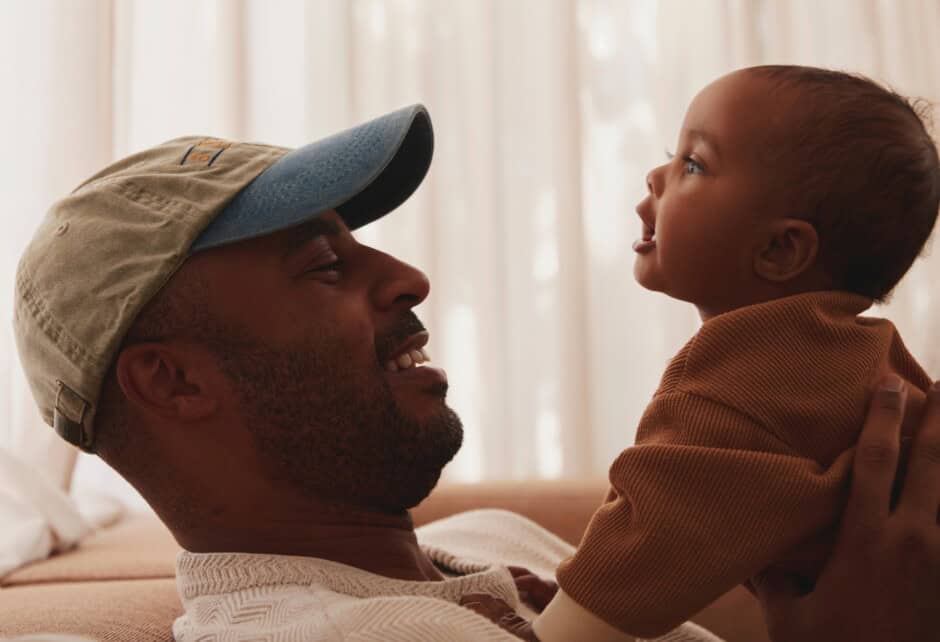
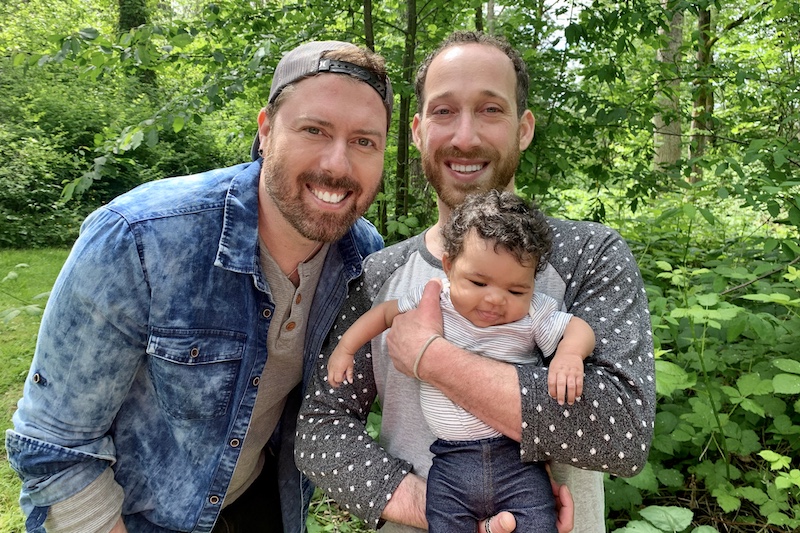
What more could men do if the culture were to pull with them instead of against them? The fathers I know who had rejected the bumbling dad narrative and had full presence in their children’s lives described something that I want to make sure gets said at this service, because it is what his passing makes possible. They were lit up.
There is a particular kind of knowledge that accumulates only through presence and the fullness of responsibility. The person who sits in the blue-dark quiet of the 3 a.m. feeding—who learns, over weeks and months of those hours, the specific weight of that body going slack with sleep, which sounds mean hunger and which mean pain, the precise inconsolable texture of a creature who hasn’t yet developed the equipment to understand why it feels what it feels—that person is not simply doing a task. They are becoming fluent in care.
This is the fluency that tells you, six years later, when the underwear is about to be outgrown before your child has noticed. That knows, from the specific way a backpack gets dropped by the door, that something happened at school today.
That is his deepest crime, the one we should name clearly as we lower him into the ground: he kept men from a primary source of human meaning. Through the slow, relentless repetition of a story that told every father who watched: You don’t belong here. You’ll only make a mess. Hand it to someone more qualified. Many of them did, and never found out what they were missing.
The bumbling dad leaves behind a complicated legacy.
The United Kingdom, to its credit, began the work of disinheritance in 2019, when they banned depictions of harmful gender stereotypes in advertising—citing specifically “a man’s inability to change nappies” as content that “limits the choices, aspirations, and opportunities” of both adults and children.
America has not fully reckoned with the dearly departed. We do have Bluey—but the fact that the most celebrated portrait of an engaged father in American homes right now is a cartoon dog imported from Australia tells you everything you need to know about the size of the hole the bumbling dad leaves behind.
This is the estate he leaves in our hands: an AI that has already learned his lesson, a generation of fathers who were not consulted about the inheritance, and a confidence gap that surveys have measured at scale—only 39 percent of fathers say they feel they are doing a very good job.
In lieu of flowers, a request.
The bumbling dad is dead, but his replacement has not yet been cast. His replacement exists—in actual homes, in actual mornings—but he has no name and no primetime slot and no franchise. “Involved dad” is too thin. “Present father” is too clinical. He is something genuinely new: a man who found his way into the interior life of his family and stayed there, who built a fluency the culture told him he was incapable of, who became—without ceremony, without acknowledgment, without a single sitcom written in his honor—someone his child runs to.
The bumbling dad was a placeholder that became permanent. A joke that became policy. A character who outlived his context by thirty years and kept collecting rent on a house he no longer owned.
We are not obligated to miss him. But we are obligated to name what comes next.
Rachel Young is a behavioral researcher and mother of two.
Share this story